By Shirley Caines, Vice President & Treasurer of PNHSA
There is a truth we don’t talk about enough in our community. A truth that hides in our closets, fills our spare rooms, piles up in our yards, and weighs down our spirits. A truth that many of us carry with shame, confusion, or silence.
Hoarding.
People see the clutter, the bags, the boxes, the old appliances, the “just in case” items. But they don’t see the history behind it. They don’t see the wound. They don’t see the story.
But I see it.
I feel it.
And I know many of you do too.
Because this behavior did not start with us.
It started the moment our ancestors were stolen.
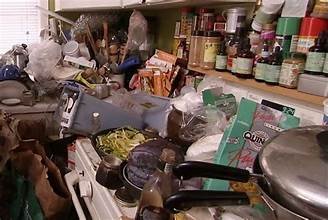
When We Were Taken, Everything Was Taken
Our ancestors were ripped from Africa from their homes, their land, their families, their culture, their language, their possessions, their identity. They were dragged across the Atlantic and dropped onto islands and plantations with nothing. Not a bag. Not a keepsake. Not a piece of clothing they owned. Not even ownership of their own bodies.
Imagine the terror of losing everything familiar.
Imagine the trauma of being stripped down to nothing.
Imagine the fear of never knowing if you would eat tomorrow.
That kind of trauma doesn’t disappear.
It imprints itself on the soul of a people.
Trauma Lives in the Bloodline
Science now speaks of epigenetics the idea that trauma can leave marks on our DNA, shaping how future generations respond to fear, scarcity, and loss.
Our ancestors lived through:
- starvation
- deprivation
- instability
- forced scarcity
- punishment for owning anything
So what do their descendants do?
We hold on.
We save.
We store.
We cling.
We keep “just in case.”
We fear letting go because our blood remembers what it felt like to have nothing.
This is not weakness.
This is survival.
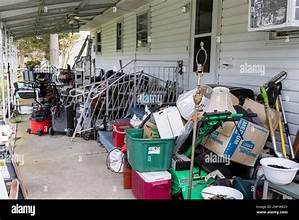
Hoarding Is Not Messiness — It Is Memory
When we keep old clothes, broken electronics, outdated items, or piles of things we don’t use, it’s not because we are dirty or irresponsible. It’s because somewhere deep inside, a voice whispers:
“You might need this.”
“You may not get another one.”
“Don’t waste anything.”
“Hold onto to what you have.”
“Life is unpredictable.”
These are not random thoughts.
These are inherited fears.
And this doesn’t only show up in our closets or our garages.
It shows up in our refrigerators too.
Even Our Fridges Tell the Story
Many of us grew up in homes where the fridge was full not of fresh food, but of containers, leftovers, and items we were afraid to throw away. We keep food long past its time, letting it spoil, turn green, or grow mold before we finally let it go.
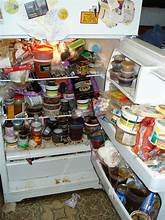
Why?
Because our ancestors knew hunger.
Because our grandparents knew rationing.
Because our parents knew struggle.
Because somewhere in our spirit, we fear the day when food might run out again.
Keeping food, even spoiled food becomes a symbol of safety.
A symbol of “I will not starve like my ancestors did.”
A symbol of “I must not waste anything.”
But spoiled food cannot nourish us.
And clutter cannot protect us.
We deserve better.
The Spiritual Truth: Hoarding Blocks Our Energy
There is also a spiritual side to this conversation one we cannot ignore.
In many African spiritual traditions, the home is a sacred space. Energy must flow. Air must move. Light must reach every corner.
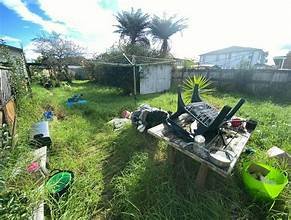
But hoarding creates stagnation.
Clutter traps old energy. Piles block spiritual movement. Spoiled food holds the vibration of decay. Unnecessary items create heaviness in the atmosphere.
When energy cannot flow, blessings cannot flow. When the home is crowded, the spirit becomes crowded. When the environment is stuck, we become stuck.
Hoarding is not just a physical issue it is a spiritual blockage.
Releasing clutter is not just cleaning it is cleansing. It is clearing the path for newness, clarity, and peace.
When Protection Turns Into Pain
Hoarding can create:
- unsafe living conditions
- pest infestations
- stress and anxiety
- shame and secrecy
- emotional heaviness
- spiritual stagnation
- difficulty welcoming others into our space
The clutter becomes a physical manifestation of generational trauma.
A reminder of wounds we never asked for.
But we are the generation with the power to break this cycle.

Healing: The New Legacy We Must Build
Healing is not about throwing everything away.
Healing is about understanding why we hold on and choosing a new path.
Here is how we begin:
1. Speak the Truth Out Loud
Say it with your chest:
“This behavior comes from trauma.”
“My ancestors survived by holding onto what they had.”
“I am healing what they could not heal.”
There is power in naming the wound.
2. Create Safety in Your Space
When the body feels safe, the mind can release.
Build routines.
Organize slowly.
Create calm corners.
Make your home a sanctuary, not a storage unit.
3. Declutter With Compassion, Not Shame
One item at a time.
One drawer at a time.
One memory at a time.
Hold the item.
Acknowledge what it meant.
Thank it for its purpose.
Release it with love.
This is not cleaning this is liberation.
4. Cleanse the Energy of Your Home
Open windows. Burn incense. Pray. Play music. Invite light into dark corners. Let the air shift. Let the spirit breathe.
A clean space is a spiritually open space.
5. Replace Scarcity With Abundance
Speak abundance into your home:
“I have enough.”
“I am enough.”
“I release what no longer serves me.”
“My home deserves peace.”
Your ancestors survived scarcity so you could live in abundance.
6. Seek Support Healing Is a Community Act
Talk to a therapist.
Join a support group.
Lean on family.
Lean on community.
We heal faster when we heal together.
7. Reconnect With Our African Roots
Before colonization, African cultures valued:
- community over possessions
- spiritual cleansing
- intentional living
- shared resources
- balance and harmony
We are not meant to drown in things.
We are meant to live in alignment.
We Are Not Broken We Are Becoming Whole
Hoarding is not a flaw in our character.
It is a scar from a history of unimaginable loss.
But we are the descendants of survivors.
We are the children of resilience.
We are the carriers of strength.
And we are the generation that can choose healing.
Let us honor our ancestors not by holding onto everything
but by freeing ourselves from the weight they never had the chance to release.
Let us create homes filled not with clutter,
but with peace, clarity, and pride.
Let us heal.

Written by: Shirley Caines
Vice President & Treasurer
PNHSA