

Reclaiming Our Future: Education, Identity & the Legacy of Enslavement in the Dutch Caribbean
By Shirley Caines, Vice-President & Treasurer, PNHSA
Introduction
For generations, the descendants of enslaved Africans in the six Dutch Caribbean islands Aruba, Bonaire, Curaçao, St. Maarten, St. Eustatius, and Saba have carried a history that was never meant to be written by us. Our ancestors were forcibly taken from their homelands, stripped of their languages, cultures, and identities, and brought across the Atlantic into a system designed to silence them.
They were forbidden to read and write, not because they lacked the ability, but because literacy was power and power was something the enslavers feared we would claim.
Today, we still feel the echoes of that enforced silence. The educational gaps, the socio-economic disparities, and the systemic barriers we face are not accidental. They are the lingering consequences of a system that once denied our ancestors the right to learn, to grow, and to dream.
As a descendant of those resilient Africans, I ask the questions many of us carry quietly:
- Why are we still fighting for equal access to education?
- How do we break cycles that were never ours to begin with?
- Who benefits when our communities remain under-resourced?
- What must we do collectively to change the narrative for future generations?
These questions are not complaints. They are calls to action.
The Educational Challenges We Inherited
1. Systemic Barriers
Our communities continue to face:
- Underfunded schools
- Limited access to technology and learning materials
- Discriminatory practices that lower expectations
- A lack of representation in academic and professional fields
These barriers are not reflections of our children’s abilities. They are reflections of systems that were never built with us in mind.
2. Lack of Support Systems
Because our ancestors were denied literacy, many families today still struggle to navigate academic spaces. This results in:
- Fewer role models in professional fields
- Limited intergenerational academic knowledge
- A sense of “not belonging” in spaces where we absolutely deserve to be
The Sports Trap: A Modern Form of Limitation
For decades, Black people especially in the Caribbean have been pushed toward sports as the primary path to success. We are celebrated when we run fast, jump high, or entertain. But when it comes to fields like:
- Science
- Technology
- Engineering
- Medicine
- Business
- Law
- Academia
We are too often overlooked, underestimated, or excluded.
This is not accidental. It is a continuation of a discriminatory pattern that says:
“Your body is valuable, but your mind is not.”

This message is harmful and deeply rooted in the legacy of enslavement where physical labor was demanded, but intellectual growth was forbidden.
Our children deserve more than being funneled into a single lane. They deserve the freedom to explore every field, every passion, every possibility.
Changing the Narrative
Promoting Diversity and Representation
Our young people need to see themselves reflected in:
- Science and technology
- Business and entrepreneurship
- Education and government
- The arts and cultural leadership
Representation is not a luxury it is a necessity.
Investing in Community Programs
We must build the support systems our ancestors were denied:
- Mentorship programs
- After-school tutoring
- Cultural education initiatives
- Leadership development for youth
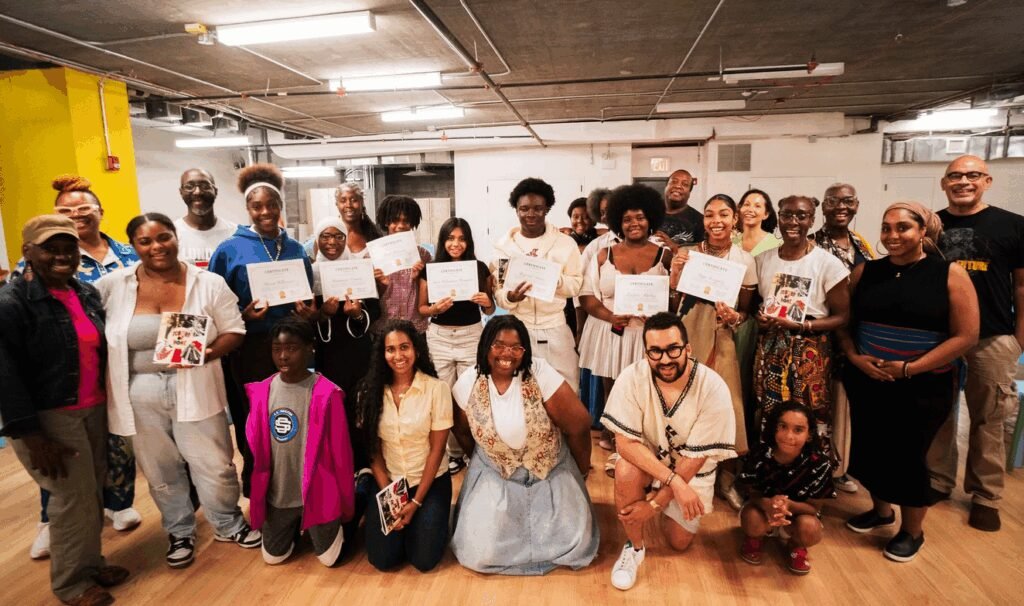
These programs help fill the gaps created by centuries of exclusion.
Practical, Achievable Solutions for Our Communities
1. Increase Funding and Resources
- Advocate for equitable school funding
- Provide textbooks, laptops, and modern learning tools
- Improve school infrastructure
2. Strengthen Teacher Training
- Offer ongoing professional development
- Create mentorship networks for new teachers
- Encourage culturally responsive teaching

3. Empower Parents and Families
- Host workshops on supporting children academically
- Build strong parent–teacher partnerships
- Create welcoming community learning spaces
4. Build a Culturally Relevant Curriculum
Our children must learn:
- The history of the transatlantic slave trade
- The stories of resistance and survival on our islands
- The contributions of African descendants to global culture
Education should affirm identity, not erase it.
5. Remove Socio-Economic Barriers
- Offer scholarships and financial aid
- Provide school meal programs
- Ensure access to healthcare and mental health support

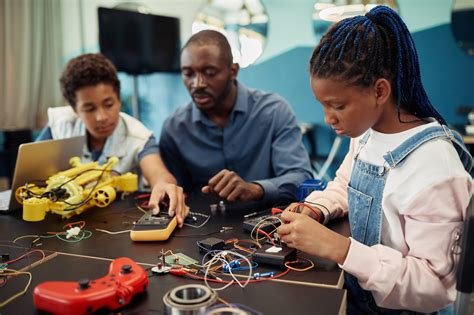
6. Promote STEM Pathways
STEM stands for Science, Technology, Engineering, and Mathematics,
- Introduce STEM clubs and competitions
- Partner with tech companies for internships
- Provide hands-on learning opportunities

7. Support At-Risk Students
- Offer counseling services
- Create safe spaces for emotional expression
- Provide after-school academic programs
8. Advocate for Policy Change
We must push for:
- Anti-discrimination policies
- Equal access to quality education
- Government accountability in resource distribution
9. Monitor Progress
- Collect data on student outcomes
- Evaluate programs regularly
- Adjust strategies based on community feedback
Why This Matters
We are not simply trying to improve education.
We are repairing a wound that began when our ancestors were denied the right to read and write.
We are reclaiming the power that was taken from them.
We are ensuring that our children and their children inherit a future defined not by oppression, but by opportunity.
A Vision for the Future
I believe in a Dutch Caribbean where:
- Every child has access to quality education
- Our history is taught with honesty and pride
- Our communities are empowered, not marginalized
- Our youth see limitless possibilities for themselves

This is not a dream.
It is a responsibility one we carry together.
As descendants of enslaved Africans, we are not defined by what was done to us.
We are defined by what we choose to build now.
And we will build something powerful.