A Tradition Older Than Our Last Name
Wrapped in Wisdom: The Ancestral Art of Caribbean African Belly Binding –
A Tradition Older Than Our Last Name
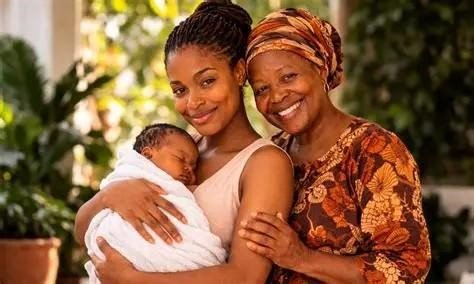
A Tradition Rooted in Survival, Strength, and Love
Across the Caribbean, our culture is stitched together by the hands of women who carried more than children they carried memory. They carried knowledge. They carried traditions that survived ships, plantations, and centuries of silence.
Belly binding is one of those traditions.
It arrived in the Caribbean not through textbooks or formal teaching, but through the bodies of African women who were forcibly brought here as slaves. These women who were our ancestors held onto what they could their songs, their rituals, their ways of caring for the body and passed them quietly from grandmother to mother, mother to daughter, daughter to granddaughter.
Some traditions were spoken. Others were whispered. And some, like belly binding, were simply done practiced so consistently that we never questioned where it came from. It became “something Caribbean women do,” even though its roots stretch back to Africa.
More Than a Wrap — An Ancestral Embrace
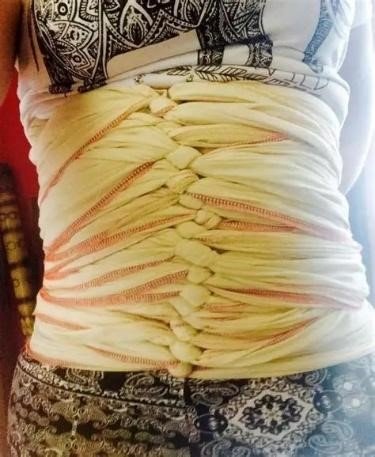
African belly binding is more than a postpartum tradition. It is an ancestral embrace.
For generations, our ancestors understood that birth is not the end of a journey, but the beginning of a mother’s healing. Belly binding was a sacred practice used to lovingly support the postpartum body, providing gentle compression to the abdomen, encouraging better posture, offering comfort to tired muscles, and reminding a mother to move slowly and honor her recovery.
But beyond the physical support, it carries something even deeper. Every wrap is a prayer. Every knot is a reminder that we are held, protected, and connected to the wisdom of the women who came before us.
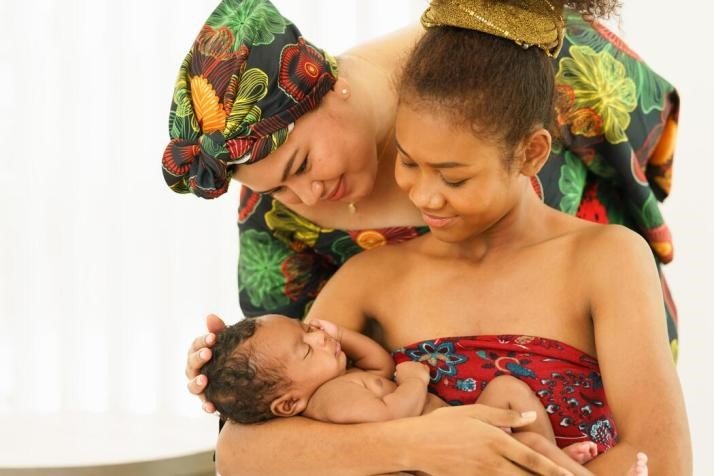
Caribbean Mothers: The Keepers of Hidden Knowledge
In the Caribbean, belly binding became one of those quiet postpartum rituals that “everybody’s grandmother did.” You’d see the cloth folded neatly in a drawer, or hear an auntie say, “Girl, make sure you bind your belly,” without ever explaining why.
But the why was always there carried in memory.
Our foremothers understood that the postpartum body needed support, rest, and care. They didn’t have hospitals, lactation consultants, or wellness influencers. What they had was ancestral wisdom and each other.
In a world that often tells mothers to “bounce back,” our ancestors taught us something different. They taught us to be wrapped, nurtured, nourished, and restored. They understood that postpartum is a sacred season where a mother deserves the same love and care she gave while bringing life into this world. This is the part modern culture forgets: postpartum isn’t a race. It’s a ritual. A recalibration. A return to self. It’s one of the ways our ancestors made sure we didn’t rush that return.

A Personal Journey Through Caribbean Tradition
After my third postpartum journey practicing African belly binding, I felt deeply honored to be able to return to this sacred tradition and continue carrying the wisdom of my ancestors forward for the generations after me.
Every time I had wrapped my belly, I had felt a connection to the mothers before me who carried this wisdom through their hands, their love, and their traditions. Their strength still lives through us.
This is the beauty of Caribbean heritage: even when history tried to erase our roots, our women preserved them through practice.
Why This Tradition Still Matters Today
Modern Caribbean mothers are navigating a world full of pressure, comparison, and unrealistic expectations. But belly binding offers something different something older, wiser, and deeply grounding.
It reminds us that postpartum is not a race. It is a rite of passage. A season of restoration. A moment to honor the body that carried life.
A REMINDER FOR EVERY MOTHER
May every mother remember that postpartum is sacred, healing is holy, and our ancestors left us beautiful practices to help us feel supported, restored, and connected.
Your body is not something to “fix.” It is something to honor. To hold. To wrap. To love back into alignment.
African belly binding is not just about the belly — it’s about belonging.

Written by Shirley Caines your Vice-President & Treasurer.